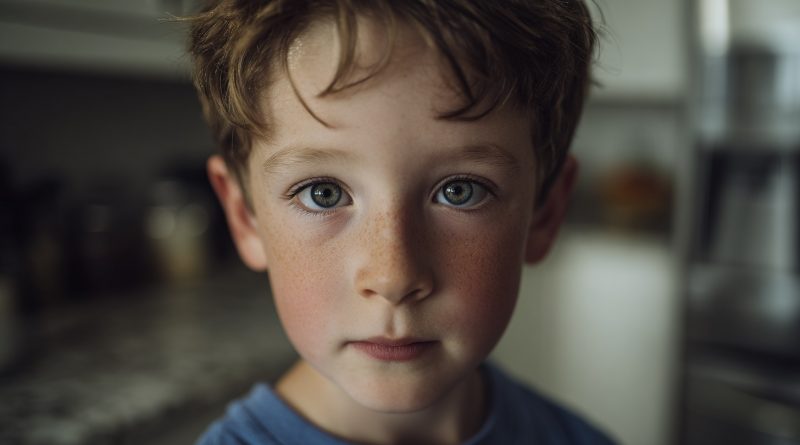
We adopted a girl from an orphanage, and six months later, our son said, “I remember her, we used to be together…”
We adopted a girl six months ago. She was five years old, quiet, withdrawn, with huge brown eyes that held such an adult sadness it made my heart ache. At the orphanage, they told us that her parents had lost their rights, and she was removed from her family at three years old. Since then, she had been waiting.
Our son accepted her immediately. He was seven, and from the first day, he called her “sister,” shared his toys, and protected her from everything in the world. We were happy that the children became friends so quickly. We thought it was just childlike affection.
But something strange happened six months later.
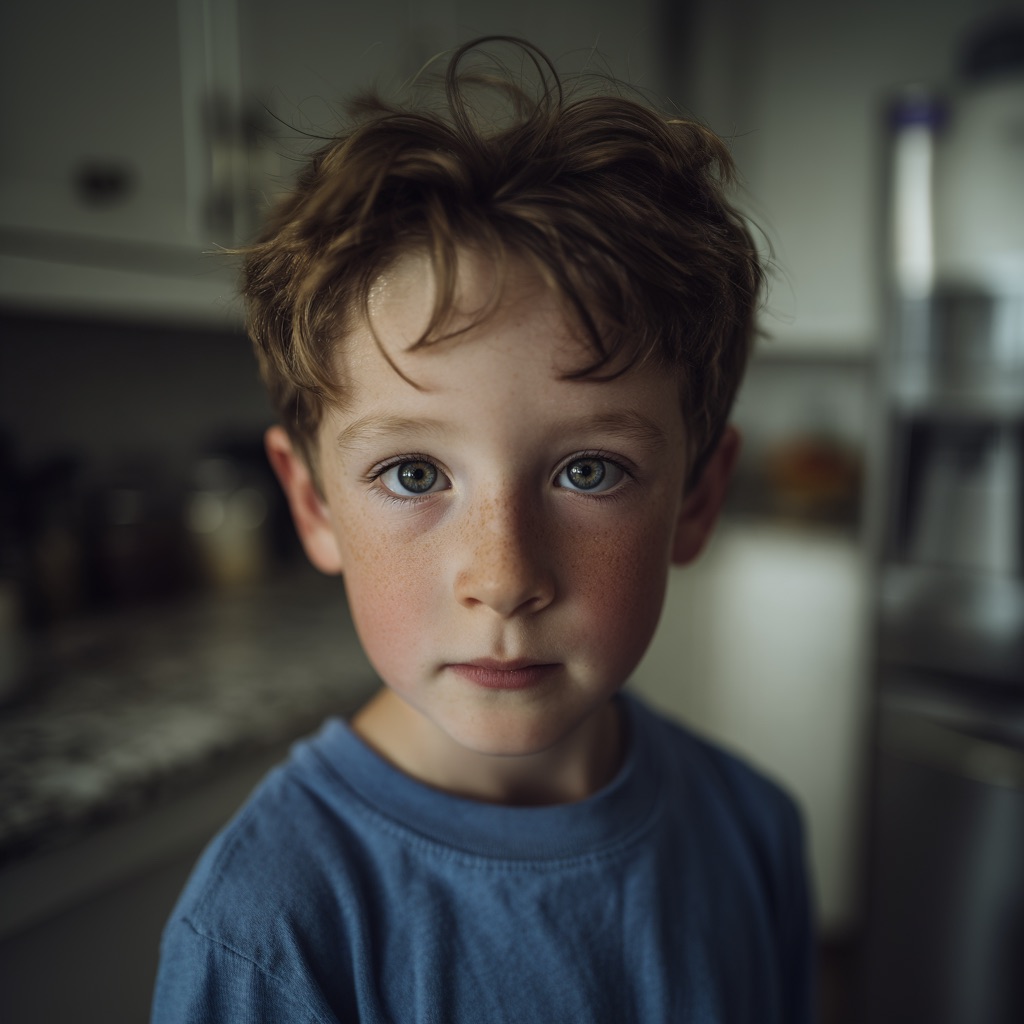
We were having dinner, and the girl quietly ate, as usual—neatly, as if she was afraid the food would be taken away. Suddenly, my son gave her a long look and said, “Mom, I remember her. We were together before.”
I smiled, thinking he was fantasizing. I asked, “Where together?”
He replied seriously, “When we were little. In that house where it was cold. She was so tiny, always crying. I gave her my toy.”
I froze. We adopted our son five years ago when he was two years old. But children at that age rarely remember anything. I wanted to change the subject, but he continued.
“There was a smell of smoke and something bad. There was a woman who yelled at us. Then people came and took us. But they took me alone. I cried because they left her behind.”
My husband looked at me. I saw the same thing in his eyes that I felt—a chill down my spine. The girl raised her eyes to the boy, looked without blinking. Then she quietly whispered, “You gave me the bear. A brown one.”
My breath caught.
In the evening, when the children went to bed, we took out all the documents. We adopted our son from an orphanage in a neighboring city. His biological mother was deprived of her rights, the father unknown. He was removed from his family at two years old. The girl—from another orphanage, sixty kilometers away. Similar story—mother deprived of rights, removed at three years old.
I called both orphanages in the morning. I asked them to check the records. I gave the birth dates, names of the biological mothers. The administrator of the first orphanage was silent for a long time, then quietly said, “Wait, I’ll check the archive.”
Twenty minutes later, she called back. Her voice trembled: “They are from the same family. The woman had two children—a boy and a girl, two years apart. They were removed at different times. The boy at two years, the girl a year later. They were sent to different institutions.”
I couldn’t speak. I just held the phone and listened as the world fell apart and pieced itself back together.
Our children were biological brother and sister. They were separated when they were removed and sent to different orphanages. For five years, they lived sixty kilometers apart, not knowing that there was someone out there who once shared toys in a cold house.
And then fate brought them together again. In our family. By chance.
We went to the orphanage to find out the details. Turns out, the system didn’t care that the children were siblings. When they removed the boy, the girl was one year old—they left her with the mother. A year later, they removed her as well, but by then the brother was already in another institution. No one ensured they were reunited. There was a note in the documents about their relation, but in practice, they ended up in different places, different lists, different destinies.
When we returned home, the children were asleep in the same room, hugged together. The girl held her brother’s hand tightly, as if afraid he would be taken away again. I stood in the doorway and cried silently.
In the morning, I told them the truth. I explained in simple words that they weren’t just brother and sister in our family—they were blood siblings. That they were born to the same mother, lived together, then were separated, but now they are together again. Forever.
My son looked at his sister very seriously and said, “I knew. I remembered your face. Just didn’t understand from where.”
The girl, who had hardly spoken for six months, suddenly hugged him and whispered, “Now you won’t leave me, will you?”
He shook his head: “Never. I’m your brother, after all.”
A year has passed. The children are inseparable. She has started to laugh, play, and trust the world. He protects her with such fierce devotion, as if making up for the years he couldn’t be there. Sometimes they remember fragments of that house—the smells, sounds, feelings. The psychologist says it’s normal. Traumatic memory persists even in young children.
Sometimes I think: what if we hadn’t adopted the girl? What if we had chosen another child from another orphanage? They would have lived life apart, not knowing that their blood, their story, their other half was out there somewhere.
Honestly, how many more biological siblings are separated in orphanages because it’s easier for the system not to get involved? How many children live their lives not knowing their family is nearby? And can it really be called a coincidence that these two found each other again? Do you believe that the memory of the heart is stronger than oblivion?
****
Six months ago we adopted a five-year-old girl, and our seven-year-old son accepted her as his own. One evening he looked at her and said, “Mom, I know her. We used to live in the same house.” At first I brushed it off as a child’s imagination, but he started describing details he couldn’t have made up. The girl looked up at him and quietly whispered a sentence that made everything inside me tighten. It no longer sounded like a game.
The next morning I took out her documents. And after what I saw there, I didn’t call anyone — I went straight back to the orphanage…
Continue reading in the comments