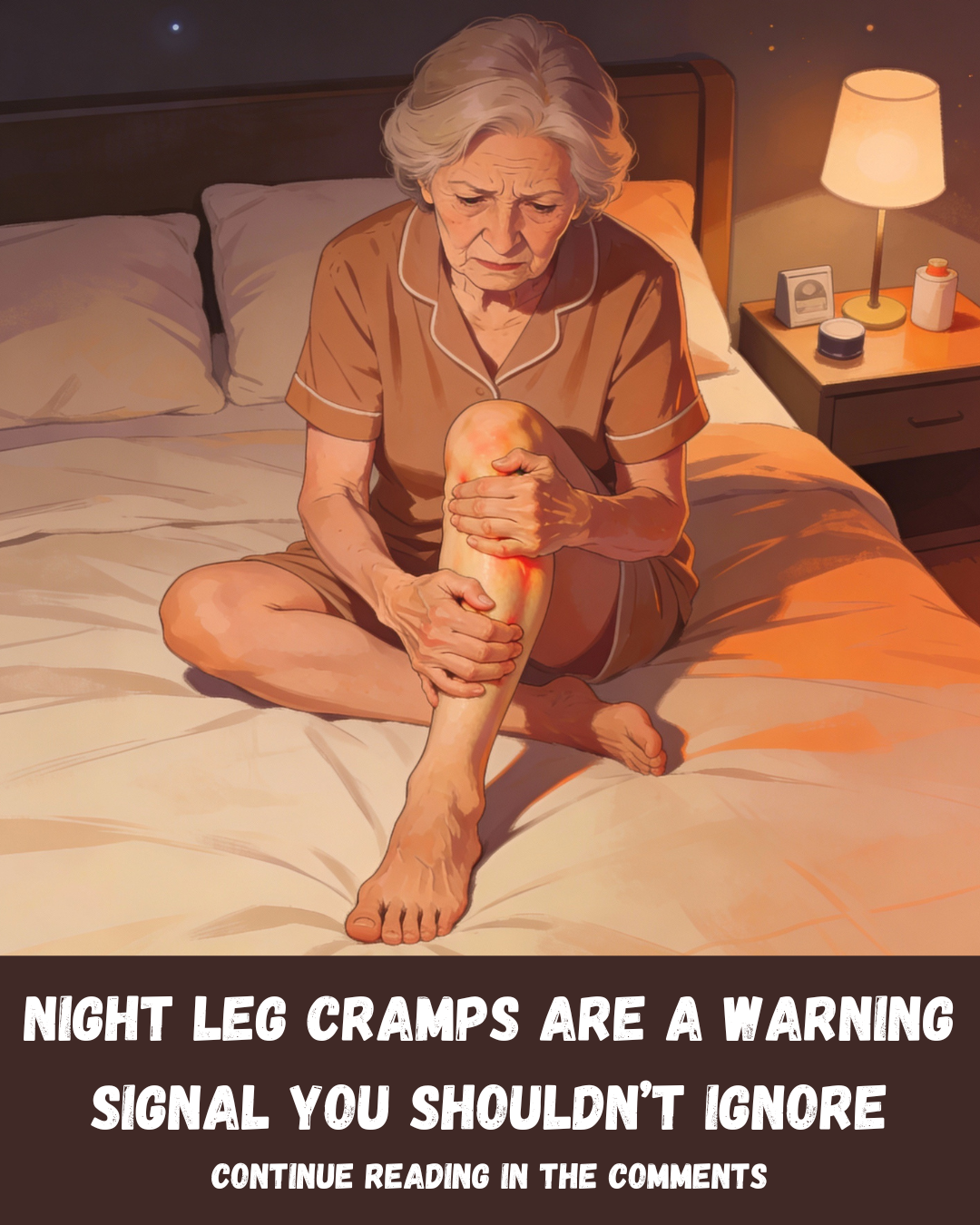
If you experience leg cramps at night, you need to know this immediately
Nighttime leg cramps are a common issue. More often than not, they are not dangerous, but they can signal that your body is lacking something or is overworked.
Main medical causes:
• Dehydration — not drinking enough water throughout the day
• Lack of magnesium, potassium, or calcium
• Poor circulation, especially with a sedentary lifestyle
• Muscle overstrain after physical exertion
• Prolonged sitting or standing without movement
• Side effects of medications (diuretics, blood pressure medications)
• Pregnancy, diabetes, nerve or vascular problems
If cramps occur frequently, it’s worth discussing this with a doctor and having some tests done.
What you can do medically
• Drink enough water throughout the day
• Check your levels of magnesium, potassium, and calcium
• Do some light leg stretches before bed
• Change your body position more often if you sit a lot
• Massage your calves and feet
• Wear comfortable shoes
• Monitor the load on your legs
Folk remedies that often help
These methods do not replace treatment but bring relief to many:
• Warm foot bath before bed
• Calf massage with a warm towel or hands
• Dry heat (heating pad, wool socks)
• Light massage with oils (olive, lavender)
• Contrast foot shower
• A glass of warm water before bed
When to see a doctor
• Cramps occur almost every night
• Pain is severe and long-lasting
• There is numbness, weakness, or swelling
• There are chronic conditions present
Conclusion:
Nighttime leg cramps are mostly associated with fatigue, dehydration, mineral deficiency, and muscle strain. In most cases, simple measures — drinking water, stretching, massage, and rest — significantly ease the condition. The key is to listen to your body and not ignore repetitive signals.
Important:
This article is for informational purposes only and does not constitute medical advice. For frequent, painful, or prolonged cramps, and if you have chronic conditions, be sure to consult a doctor for examination and treatment recommendations.