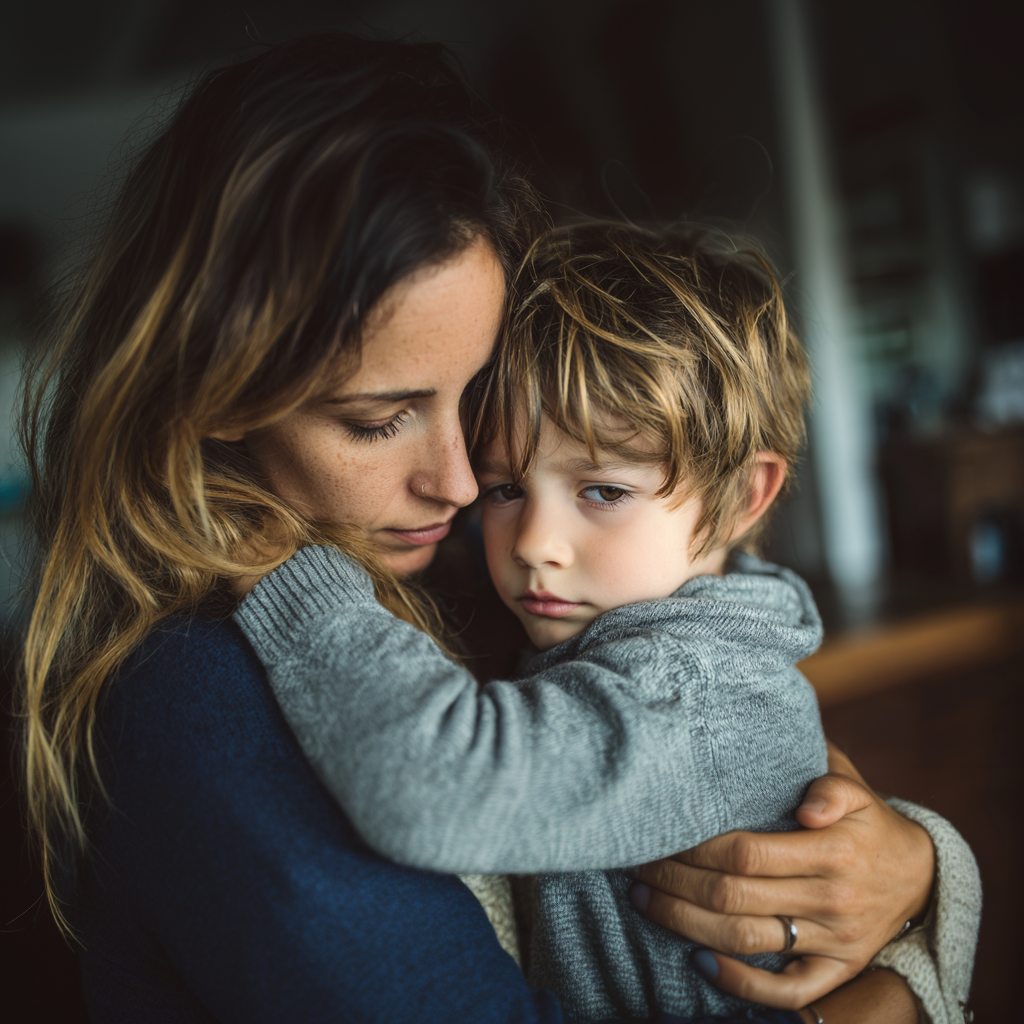
My five-year-old son quietly said, “Mom, Grandma told me I’m an outsider… and asked me not to tell anyone.” My heart sank…
When I met my husband, I already had a two-year-old son. The child’s father had left before the birth, disappearing from our lives completely. I raised my son alone, working and struggling to survive. I didn’t believe anyone would want to tie their life to a single mother.
But my future husband was different. He didn’t just accept us—he chose us. He loved my son as his own. Played with him, read bedtime stories, taught him to ride a bike. When we got married, he officially adopted the boy. Gave him his last name. Became a true father.
However, his mother, my mother-in-law, never accepted this. From our first meeting, she looked at me with cold disapproval. At my son—with barely concealed disdain. To her, he was a mistake, a burden, an outsider child she was forced to tolerate.
She never gave him birthday presents. When we visited, she would hug and kiss my husband, ignoring my son. If he approached, she withdrew, as if he were contagious.
My husband tried talking to her. Explained that he was his son, that he loved him, that he asked her to treat the boy with respect. She nodded, promised, but nothing changed.
Last night, my son came up to me. Quietly, his head down. I immediately knew—something was wrong.
“Mom,” he began, his voice trembling. “Grandma said I’m an outsider. That I’m not a real grandson. And asked me not to tell anyone.”
I froze. I couldn’t breathe. A five-year-old child. He’s five, and he was told he’s an outsider.
“When did she say this?”
“Yesterday, when we were alone at her place. You and Dad went to the store. She said I should know my place. That I have a different dad, and this one is just a nice uncle.”
My hands clenched into fists. I hugged my son, held him close.
“You are not an outsider. You are my son. And Dad’s son. Real, native, loved.”
In the evening, when my husband returned from work, I told him. I saw his face change. From confusion to shock, from shock to fury.
The next day, we went to my mother-in-law’s. Without our son. Just the two of us.
My husband didn’t beat around the bush. Asked directly: why did she tell a five-year-old child that he’s an outsider?
She didn’t deny it. Didn’t even try to justify it.
“I told the truth. He’s not my real grandson. I have the right not to pretend.”
“You said this to a child,” my husband repeated slowly. “A five-year-old child who considers you his grandma.”
“He needs to know the truth. Sooner or later, he’ll find out.”
I couldn’t take it anymore.
“He knows the truth. We have never hidden that his biological father left. But he has a real father—my husband, who chose him, adopted him, loves him. And you told him he’s an outsider. That he should know his place.”
She shrugged.
“I don’t have to love someone else’s child.”
My husband stood up.
“Then you will no longer see any of my children. Neither this one nor any that may be born in the future.”
My mother-in-law turned pale.
“You can’t forbid me from seeing my grandchildren!”
“I can. This child is my son by law. I adopted him. You’re not his biological grandmother, and you have no legal rights. And if we ever have other children, you won’t see them either. Because I won’t let my children interact with someone capable of telling a five-year-old child that he’s an outsider.”
We left. My mother-in-law tried calling, sending messages. My husband didn’t respond.
A year later, we had a daughter. My husband’s biological child, my mother-in-law’s biological granddaughter. She found out about the birth and demanded a meeting. Wrote a long message stating she has the right to see her blood granddaughter.
My husband replied briefly: “You have no rights. You called my son an outsider. Now both of my children are outsiders to you.”
Three years have passed. My mother-in-law attempted to go to court for the right to communicate with her granddaughter. She lost—the court sided with us. She has no grounds to demand contact, considering her attitude toward the older child.
My son grows up happy. He knows his father chose him. That his younger sister is his true sister. That he is part of the family not by blood, but by love.
Sometimes he asks about Grandma. Why she doesn’t come anymore. I answer honestly: she couldn’t love him as he is. But we do. And that’s enough.
Would you forgive a mother-in-law for words said to a five-year-old child for the sake of preserving family ties? Or are there things that can never be forgiven?
*************
Last night my five-year-old son came up to me with his head down and whispered softly:
“Mom, Grandma said I’m a stranger… and told me not to tell anyone.”
Everything inside me broke. My husband adopted him three years ago, gave him his last name, and loves him as his own, but his mother never accepted my child.
When I asked my son what else she said, he answered in a trembling voice:
“She said I should know my place, because…”
I didn’t let him finish.
The next day, my husband and I went to see his mother, and what happened there…
Read the continuation in the comments